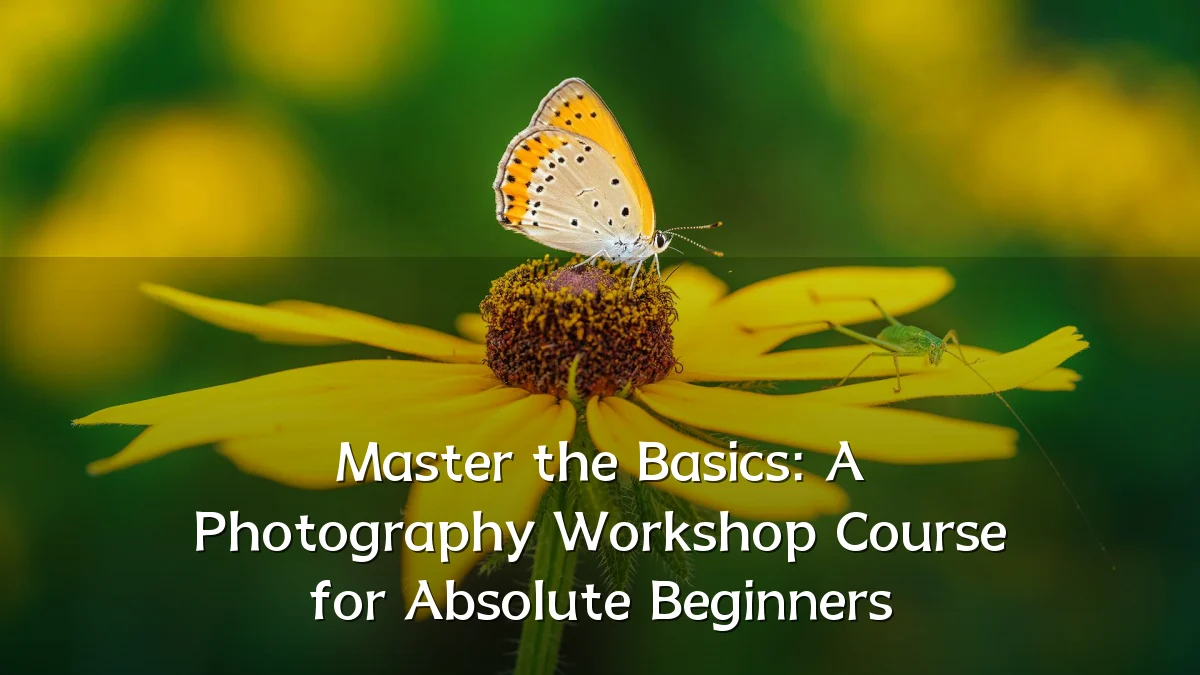
Master the Basics: A Photography Workshop Course for Absolute Beginners
Recent Trends in Beginner Photography Education
The demand for structured offline and live-online workshop courses has grown steadily as smartphone camera users seek to transition to dedicated cameras. Many beginners report feeling overwhelmed by manual settings, leading to a preference for guided, cohort-based learning over self-paced video libraries. Short-format workshops—often spanning two to four sessions—are becoming the norm for adult learners who want tangible progress without a long-term commitment.
- Workshop formats now commonly include live feedback on composition and exposure.
- Small-group cap sizes (6–12 participants) are used to ensure individual attention.
- Hybrid courses offering a mix of pre-recorded reference material and live practice sessions are on the rise.
Background: Why Structured Workshops Are Gaining Ground
Traditional photography education often relied on semester-long college classes or self-teaching through trial and error. The workshop course model addresses a gap: it provides a clear progression path—starting with aperture, shutter speed, and ISO—before moving to composition and light. This structure reduces initial frustration and helps beginners build confidence before venturing into more complex genres such as portrait or landscape photography.

Industry observers note that the workshop course format aligns with how most adults learn best: in small, interactive groups with a clear end goal.
User Concerns When Choosing a Course
Absolute beginners typically prioritize three factors: affordability, instructor approachability, and equipment requirements. Many worry they lack the "right" camera or that they will fall behind peers. Workshop courses that address these concerns directly tend to see higher enrollment and completion rates.
- Equipment anxiety: Courses that explicitly state "any camera with manual controls works" lower the barrier to entry.
- Pace and repetition: Learners value built-in practice time during sessions, rather than being sent home to practice alone.
- Post-course support: Access to a community forum or a single follow-up session is increasingly expected.
Likely Impact on Skill Development
When learners complete a workshop course designed for absolute beginners, they typically gain the ability to shoot in manual mode with consistent exposure. Beyond technical skills, participants often develop a more critical eye for composition and lighting. The social element—sharing images and receiving critique in a safe environment—accelerates progress compared to solo learning. For many, finishing the course marks the point where photography shifts from a frustrating hobby to an engaging skill they actively want to practice.
What to Watch Next
The next evolution in beginner workshop courses may involve modular structures: a foundations module followed by genre-specific electives (street, portrait, nature). Another trend to monitor is the integration of basic editing workflows (Lightroom or mobile apps) into the core curriculum, as beginners increasingly want to understand the full pipeline from capture to finished image. Finally, watch for shorter "taster" workshops that allow prospective students to assess an instructor's teaching style before committing to a full course.