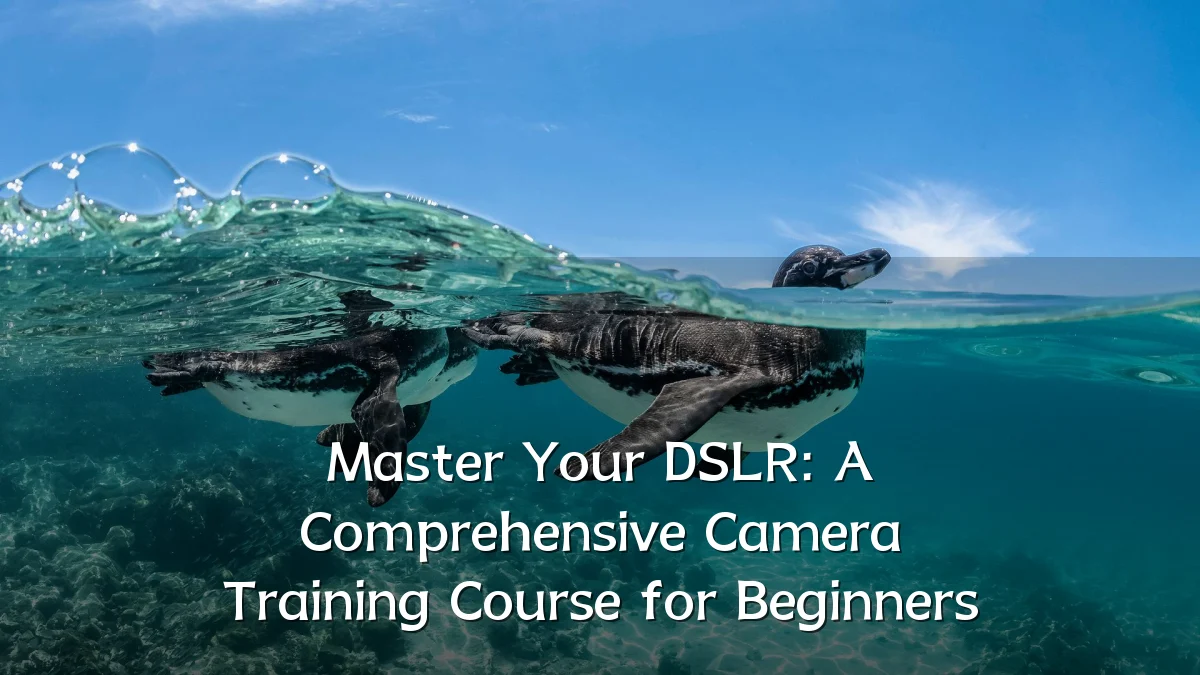
Master Your DSLR: A Comprehensive Camera Training Course for Beginners
Recent Trends in Beginner Photography Education
Enrollment in structured camera training has risen steadily as smartphone photographers seek greater creative control. Many entry-level DSLR and mirrorless cameras now ship with minimal printed guidance, pushing new owners toward online or in-person courses. Short-form video tutorials remain popular, but a growing number of beginners report wanting a sequential, hands-on curriculum rather than fragmented tips.
Background: Why a Dedicated DSLR Course Remains Relevant
Even as mirrorless systems gain market share, entry-level DSLRs still offer an affordable, durable platform for learning exposure fundamentals — aperture, shutter speed, and ISO. A comprehensive course designed for this hardware typically covers:

- Camera anatomy and menu navigation
- Exposure triangle and metering modes
- Lens selection and focal length basics
- Composition rules and practical exercises
- File formats (RAW vs. JPEG) and basic editing workflow
Instructors often emphasize that understanding these core principles translates directly to other camera systems, making the DSLR a effective teaching tool.
User Concerns and Common Pain Points
Beginners frequently express several frustrations when starting a camera training course:
- Overwhelming jargon and technical depth in early modules
- Lack of real-world shooting assignments to reinforce theory
- Uncertainty about equipment — whether their specific camera model is supported
- Difficulty balancing course pace with work or family schedules
- Limited feedback loops in self-paced online formats
These concerns highlight why course design matters as much as content. Programs that offer modular lessons, downloadable cheat sheets, and optional instructor Q&A sessions tend to retain learners longer.
Likely Impact on Skill Development and Creative Confidence
A well-structured beginner course can produce measurable gains within a few weeks. Learners typically move from full-auto mode to semi-manual settings like aperture-priority or shutter-priority. Over the duration of a typical 6-to-8-week program, participants often:
- Reduce underexposed or blurred images by applying exposure compensation
- Select appropriate autofocus modes for static versus moving subjects
- Edit RAW files with greater intentionality, not just preset filters
- Articulate why an image works — light, leading lines, depth of field
These outcomes directly support the stated goal of mastering a DSLR, though ongoing practice beyond the course remains essential for fluency.
What to Watch Next in the Camera Training Landscape
Several developments may reshape how beginners approach camera training in the near term:
- Integration of AI-assisted feedback tools that analyze student photos for exposure and composition issues
- Hybrid courses combining recorded lessons with live virtual workshops for real-time critique
- Curriculum expansion to cover hybrid shooting (still + video) as entry-level cameras add video capabilities
- Rental or loaner programs that let students try full-frame bodies before purchasing
- Modular pricing — paying per topic rather than for an entire course upfront
For now, the most effective entry point remains a course that pairs clear technical instruction with structured shooting practice, whether delivered online or in person.